Paisagem
Paulo David“Landscape” is an exhibition that evokes two moments. A first moment, the elaboration of the four interventions, and a second, current moment, which is the representation of these four projects.
At these two levels, the question raised by ee cummings emerges: the fingers that torment the earth, the hand of the philosopher or the architect. It concerns the way in which the Earth is touched, the imposition of scientific and philosophical models on nature or, specifically here, human intrusion into the construction of the landscape.
In the first moment, the interventions of Paulo David's studio—the shelters, the house, and the arts center—reveal the recognition of an ultimate authority in nature's response. These works show a lucidity about how the landscape is rewritten, how it is reconstructed, admitting the context's response as the decisive word on the problem. It is a drawing that awaits the replica, the epilogue written when the place absorbs, resists, and redesigns the original proposal. Paulo David's architecture understands that the incision a drawing makes in the Earth is the culmination of a profound understanding of the place where it is inscribed. The imposition of the hand, the "mischievous thumb," must withdraw to give way to the revelation of a territory. This human construction, silently inscribed in each place, awaits, since the origin of time, to be revealed. Paulo David draws, in the expectation of intimate reconciliation with the Earth, restoring the orography, revealing the horizon, extending the matter of the soil or rediscovering the ruin and, in each case, accepting the gift.
In this way of working, the care with which the fingers touch the landscape is evident, a work of attention and delicacy aware of the telluric force with which the Earth witnesses, resists, and responds. The drawing fixes its structure but, simultaneously, reveals the hidden secret, links itself to the place, materializes as a natural consequence of the territory's evolution.
Architecture accepts this condition of the Earth, the lucidity that the landscape's response is the touchstone of the intervention's success. Paulo David's hand draws, raising to reveal the horizon, or sculpts to subtract the void hidden in the ground. Seeking the invisible evidence concealed by the territory, the fingers do not torment but grope, not to evade conflict but to, finally, open the incision with the precision of poetry.
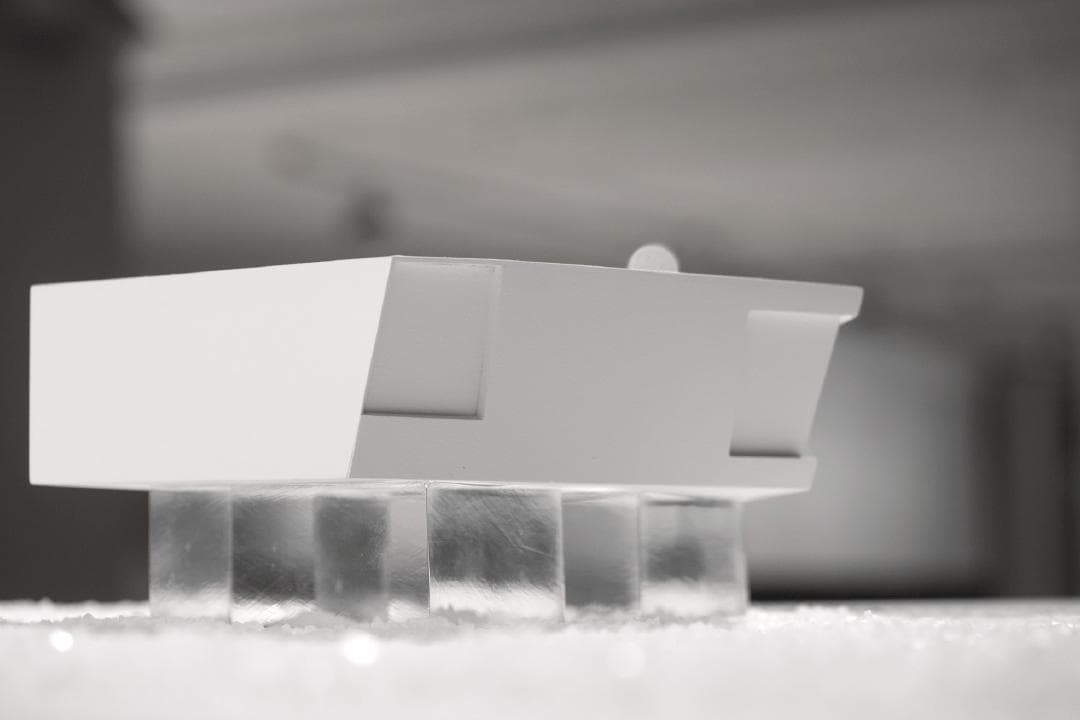
In a second, present moment, the four interventions are exhibited, and the choice is made, once again, to grope, to touch the gallery space tangentially. Not to impose but to suggest, not to obstruct the space but to choose a support made of transparency. Not to expose the technical drawing but to insinuate a delicate line over a photographic record of the different intervention sites. Not to touch the walls but to reveal the reverse side. And finally, to suspend.
In both moments, the restraint of the action is manifested. In an exercise of suspension, an apnea of the architectural gesture, the fingers that draw retreat to listen to the place and increase the precision of the touch. Here the Architect listens very closely to the rhythm of the earth, draws, and silently awaits the response of Spring.