
Cooperativa de Comunicação e Cultura
Cooperativa de Comunicação e Cultura is a non-profit organization based in Torres Vedras whose mission is to create, promote and foster the Visual Arts.
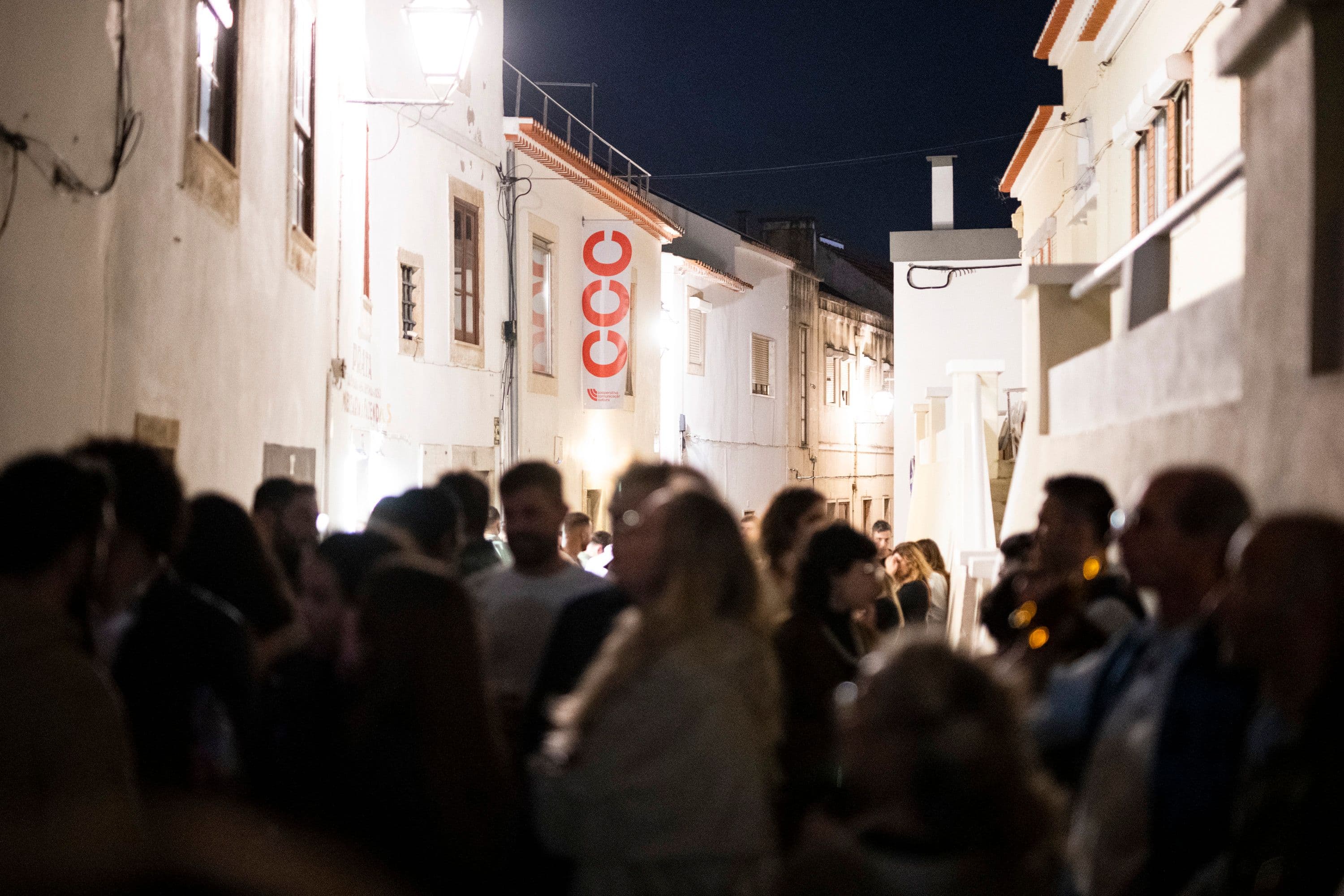
Organization
Founded in 1979, during the surge of cultural associations following the April 1974 revolution, it quickly became a cultural agent of high and recognized value for the city and the western region of the country, with part of its work housed in the collection of the Calouste Gulbenkian Foundation.
It owns the Center for Contemporary Culture in the city's historic center, comprising the buildings Câmara Escura (no. 13) and Câmara Clara (no. 9), where it is based. Through its galleries and other available spaces and services, it produces and hosts exhibitions, conferences, presentations, talks, concerts, and events of various formats, also maintaining a specialized library with over 2600 publications for public consultation.
The Communication and Culture Cooperative obtained Public Utility Status in 1993, and in 2007, the Ministry of Culture granted it the Status of Superior Cultural Interest.
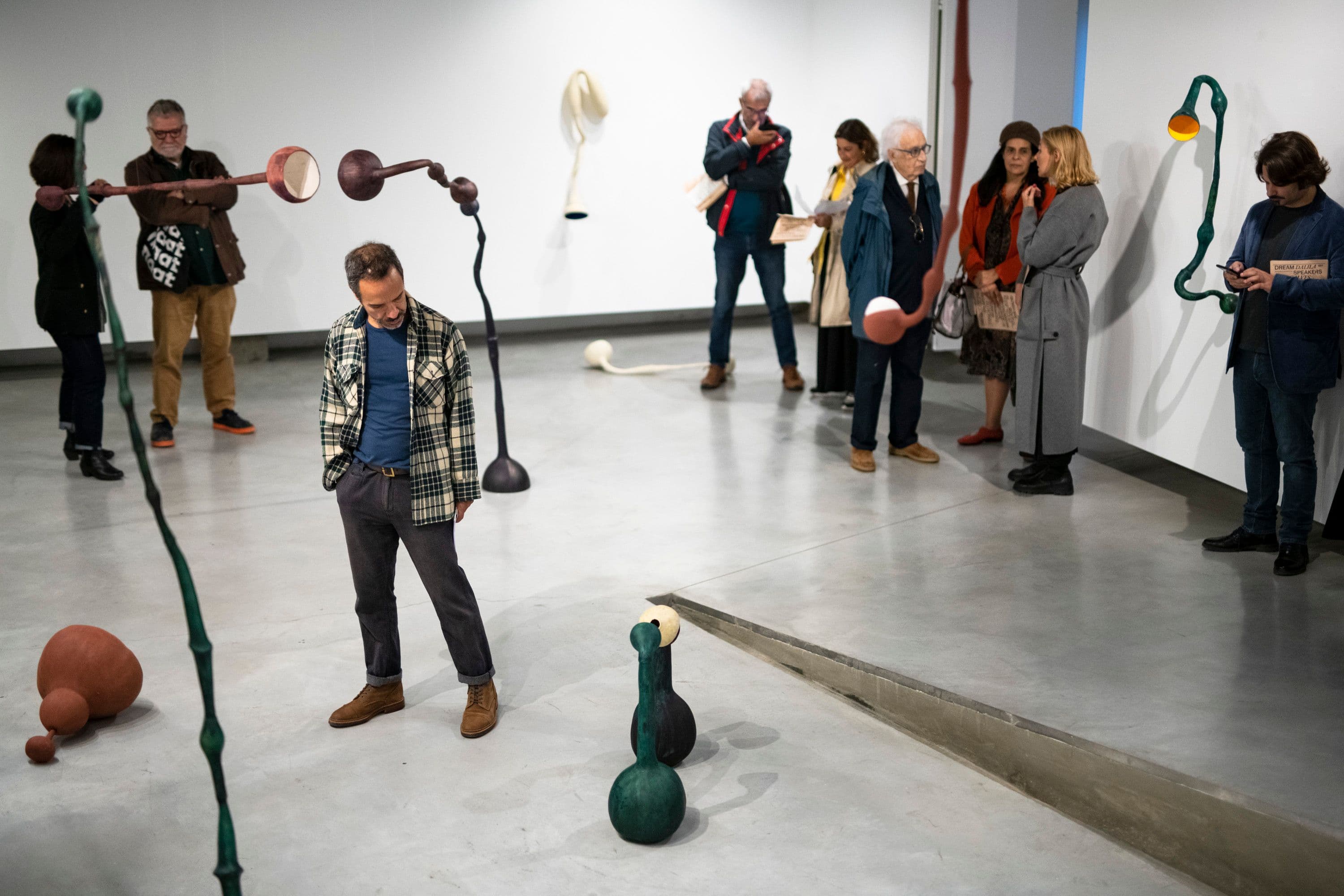
The Cooperative's activity is based primarily on the programming of its two buildings—the headquarters building and the Camera Obscura—fully equipped to host the respective projects and artists, maintaining a continuous program of visual arts and photography exhibitions, as well as concerts, artist talks, and workshops. Thus, the Cooperative intends to continue its strategy of programmatic exchange, focused on audience engagement and the creation of spaces and opportunities to showcase local, national, and international, emerging and established artists and projects, with the aim of promoting the itinerancy of artistic work throughout the country.
History
The Cooperative's trajectory comprises four structural initiatives: the Área newspaper, the Galeria Nova gallery, the Center for Contemporary Culture (current headquarters), and the Camera Obscura.
In 1979, in a post-revolutionary context and during a vibrant meeting of creatives in the area, the idea arose to create a disruptive periodical newspaper with bold editorial and graphic proposals for the time. Área was born, addressing social and cultural issues and promoting public debate on ideas that still resonate within the region's cultural fabric. Between 1979 and 2009, nineteen issues were published. Given their artistic and cultural value, copies of all these issues are now housed in the archives of the Calouste Gulbenkian Foundation, at their invitation.
The space for criticism and reflection was created; what was lacking was a space for exhibition and debate. Thus, in 1982, Galeria Nova, the first gallery in Torres Vedras, was born. Its programming highlights the PERFORM’ARTE (1985), a nationwide event dedicated to the most advanced artistic proposals of the time. In 1992, it acquired the Center for Contemporary Culture, now the Camera Obscura. This was its first owned space and fundamental to the role of cultural operators in local and regional development. It includes two gallery spaces, a cafeteria, a library with over 2600 publications for public consultation, a climate-controlled collection, an analog photography laboratory, two multipurpose rooms, and a storage room. In 2007, it was considered by the Ministry of Culture to be of the best cultural interest.
At the invitation of the Torres Vedras City Council and integrated into the QREN (National Strategic Reference Framework), the Cooperative acquired the Camera Obscura in 2013. This created a pioneering space for programming activities in the area of Visual Arts, possessing unparalleled technical capabilities to meet future and demanding programmatic needs through new technologies. It features a gallery with an advanced ERCO lighting system, a training room, an analog photography lab and a digital photography lab, a cafeteria, a multipurpose room, and a terrace overlooking Torres Vedras Castle. Forty-six years after its founding, the Cooperative thus consolidates its trajectory and provides the city of Torres Vedras and the Western region with a structuring project in the field of contemporary culture and visual arts. It does this by incorporating a multidisciplinary heritage that is part of its identity, but establishing new guidelines aimed at long-term intervention with emerging groups, relying on strategic partners such as ESAD.cr and FBAUL. Over the past few decades, hundreds of artists and creatives have collaborated with the Cooperative, including emerging artists who are now recognized figures in the art scene, such as João Hogan, Rogério Ribeiro, Rui Oliveira, Alberto Carneiro, José Saramago, Ana Haterly, Eduardo Nery, Graça Morais, Helena Almeida, Sebastião Rodrigues, Agostinho da Silva, António Ramos Rosa, Baptista Bastos, Lurdes Pintassilgo, Maria Rosa Colaço, Mário Viegas, José Brandão, Antero Valério, Pedro Letria, Fernando Calhau, John Baldessari, Jorge Molder, Julião Sarmento, Matt Mullican and Michael Biberstein, André Cepeda, Pedro Calapez, Nanã Sousa Dias, Paulo Catrica and many, many others.
Governing Bodies
President
Susana Luís
Vice President
Inês Mourão
Secretary
Luís Farrolas
Treasurer
Paulo Santos
Member
André Bendocchi Alves
Member
Carlos Pereira
Member
Carlos Miguel
Alternate Member
Antero Valério
Alternate Member
Paulo Tomé
President of the Fiscal Council
Filomena Rodrigues
Rapporteur of the Fiscal Council
Bruno Máximo
Member of the Fiscal Council
David Lopes
Member of the Fiscal Council
Nídia Figueiredo
Member of the Fiscal Council
Joana Maria
Photography
Joana Maria
Hugo David
Website