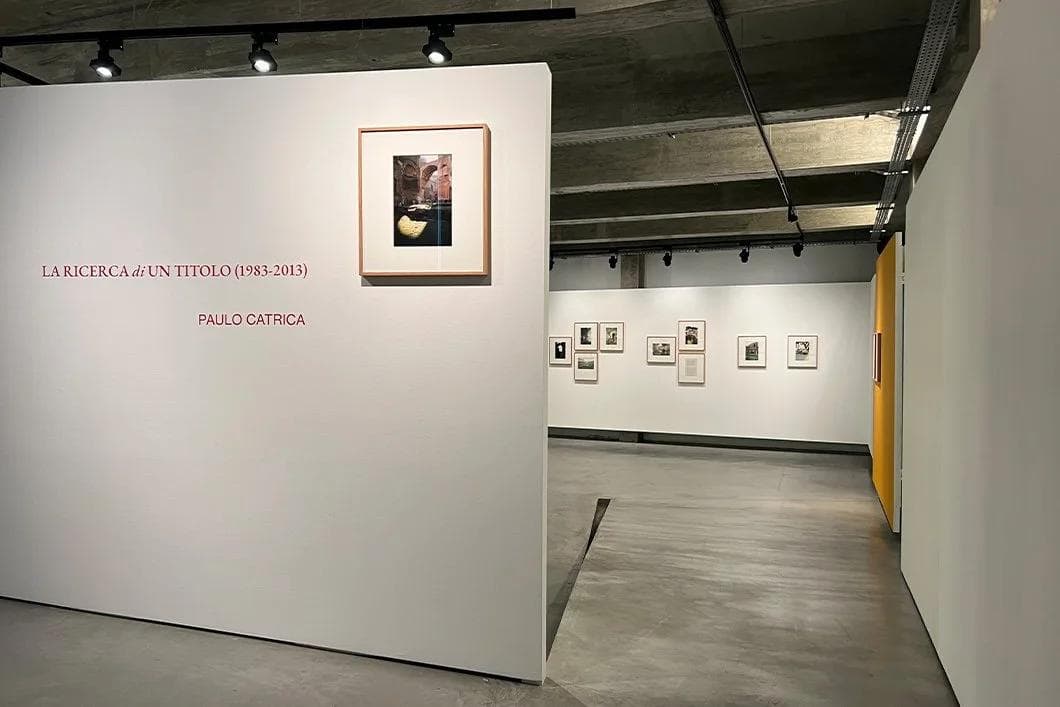
La ricerca di un titolo (1983-2013)
Paulo CatricaWe invented images to live in them beyond the short time we live.
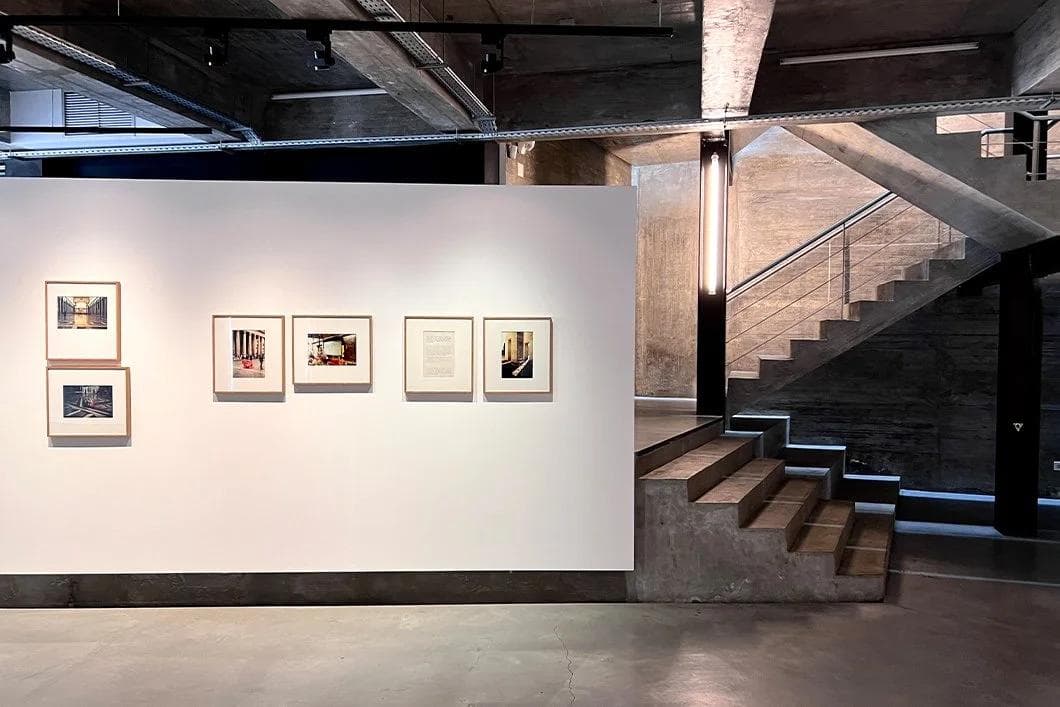
Like remnants of a double archaeology—of the photographed subject and of analog technology—these photographs intend to operate as an imperfect ellipsis of Rome. An open field of traces and stories, of partial, individual and collective memories, that contradict the hypothesis of reconstructing a whole. The photographs and their exhibition result from multiple chance encounters, from unexpected re-encounters with texts, books, and films. Their arrangement in the exhibition format has its genesis in an essay by Freud, which evokes the metaphor of the historical city as a palimpsest, establishing the analogy between the destruction of the urban fabric and human traumas.
The result of two trips to Rome, in March 1983 and December 2013, these snapshots from 35mm color negative analog film were likely destined for the obscurity of the archive. Their rescue took place sometime in 2018, when, thanks to my friend Sebastiano Raimodo, the negatives returned to Italy, and since then, in a back-and-forth between Lisbon and Monticello-Mondonico, I have been receiving from Simone Cassetta 10x15 cm picolli provini and 19x28 cm prints on different analog photographic papers. The surface of the analog papers, the defects of the expired films, and the dominant colors were decisive in the decision to exhibit these photographs.
An essay by Luigi Ghirri illuminated the hypothesis of showing photographs of Rome, an intensely represented place:
(...) all places have been overwritten, recounted, and investigated to such an extent that every time we look at them, it seems impossible to escape a feeling of 'déjà vu' (...) little by little, we find hidden corners that, paradoxically, along with others more familiar, seem mysteriously full of novelties and unforeseen details (...) These are a sign that we, relying on stereotypes, have forgotten the enormous power of revelation that our gaze can hold, and that all our cities probably need to be read anew with a gaze that 'restores' all the monuments and structures that make up our habitat, and the colors that determine and define it (...) the task is simply to review and revisit these places that, at first glance, seemed to deny any reinterpretation.
The reversal of Freud's metaphor gained meaning, using photographs as a starting point. The reconstruction of this field of fragments precipitated a double movement: rereading authors and revisiting films that had lain dormant, like the negatives in the archive drawer. And these stimulated new readings.
Among the authors revisited, cited, and named, intellectual admiration and ideological and political affinities for Leonardo Sciascia and Pier Paolo Pasolini motivated the choices of the short stories included in the montage. The difficulty in choosing a title that avoided a hypothetical logical, discursive, or narrative sense found refuge in Pasolini's words, leaving the reconstruction of this imperfect ellipsis to the viewer:
"It is he who must reconstruct together the fragments of a scattered and incomplete work. It is he who must reconstruct distant passages that, however, integrate." It is necessary to organize the momenti contraddittori ricercandone the sostanziale unitarietà. It is necessary to eliminate eventual incoherence (ossia ricerche or ipotesi abbandonate). It is necessary to replace the ripetizioni with the eventual variant (the alternative accepts the ripetizioni as it is appassionate anafore).
Paulo Catrica (Lisbon, 1965)
Photography studies at Ar.Co., Lisbon (1985); Degree in History, Lusíada University, Lisbon (1992); Master's degree in Image and Communication, Goldsmith's College, London (1997); PhD in Photography Studies, University of Westminster, London (2011). Researcher at the Institute of Contemporary History, Nova University of Lisbon.
He has exhibited and published regularly since 1997. Recent exhibitions (selection): Fussball ißt unser Leben, Kunsthaus Interlaken (Switzerland, 2022); Madonie Paesaggi 1973-2021 (Petralia Sottana, Sicily, 2022); O sítio em Vista, CEFT (Tomar, 2021); Almada, A Territory in Six Ecologies, City Museum (Almada, 2020); Prospectus, Carpintárias de São Lázaro (Lisbon, 2020); The Detour That Made the River Bend, Galeria do Parque (V.N.Barquinha, 2019); Grübler, Casa das Artes (Tavira, 2017); El Solitario Jorge, six hundred twenty-two days before his death, Galeria Presença (Porto, 2016).
Monographs: The Detour That Made the River Bend (2019), Memorator (2015), Mode d’emploi (2014), TNSC (2011), Liceus (2005).