Dream Speakers
Dalila GonçalvesCalabash (from the Arabic kara bassasa, meaning glossy gourd) or Calabash (Lagenaria vulgaris) is a climbing plant of the Cucurbitaceae family, popularly known as calabash plants. It was one of the first cultivated plants in the world, initially in Africa, in northern and northeastern Brazil, and during the colonial period, it was also introduced and planted in almost all of Portugal, from Minho to Madeira, passing through Santarém. Today, it is spread across all continents of the planet. The calabash fruit is harvested, the pulp is removed, washed well, and after drying, it is used for various purposes. Its use as an element of daily life, from a container for water and food to a musical instrument, was copied and assimilated by the colonizing peoples among African and Brazilian peoples. In Portugal, many artisans also transform them into decorative objects, such as swans, and utilitarian objects, such as lamps.
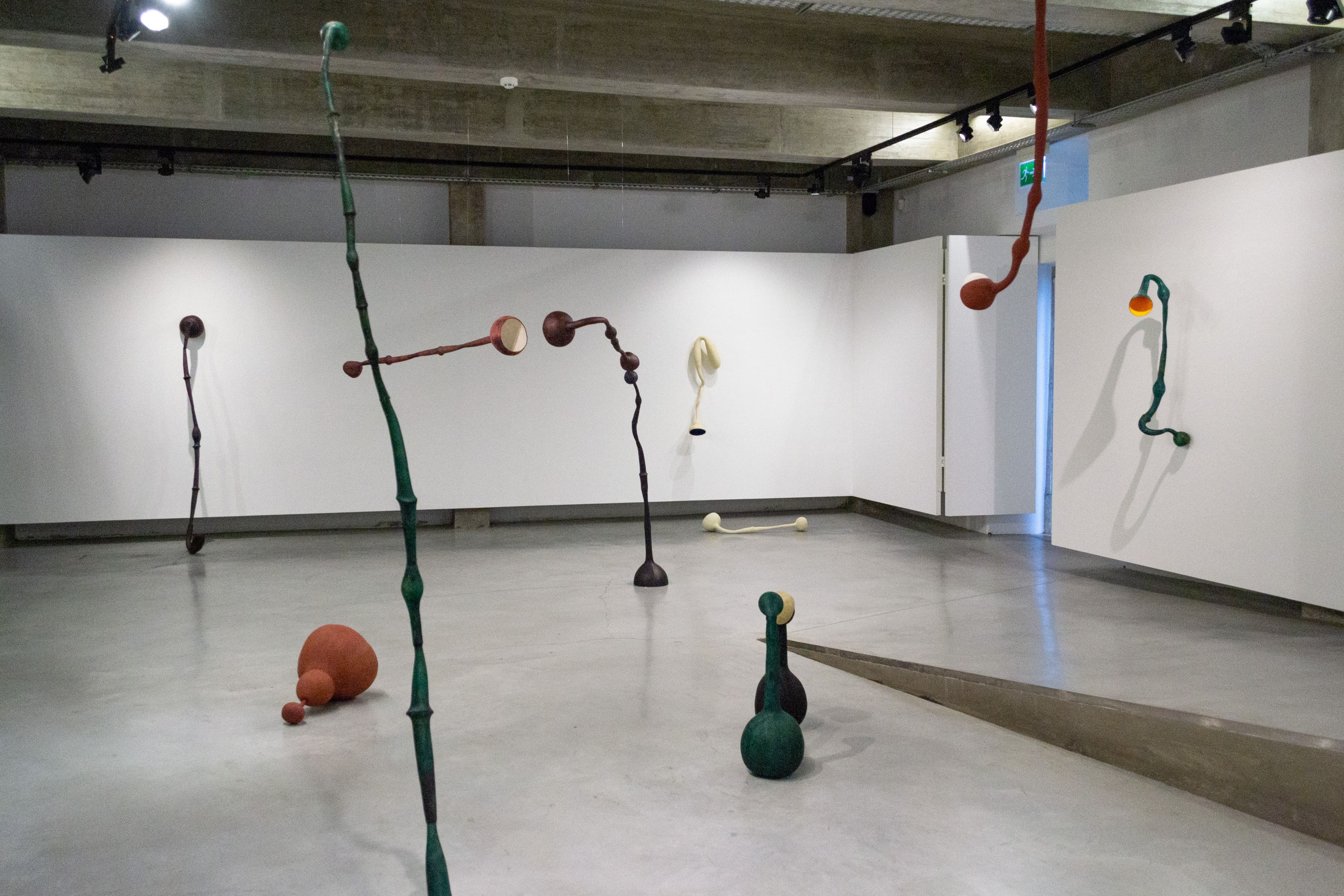
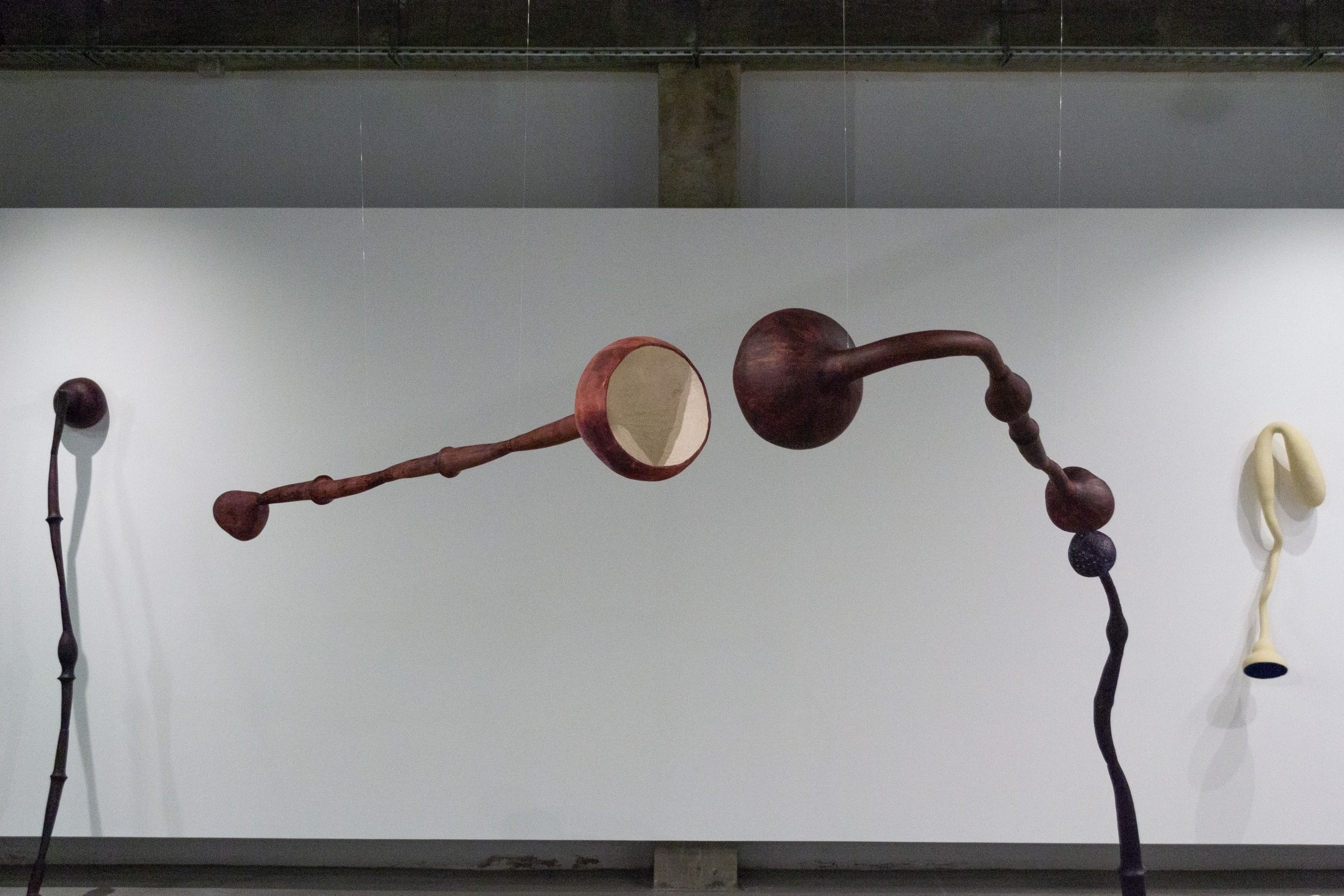
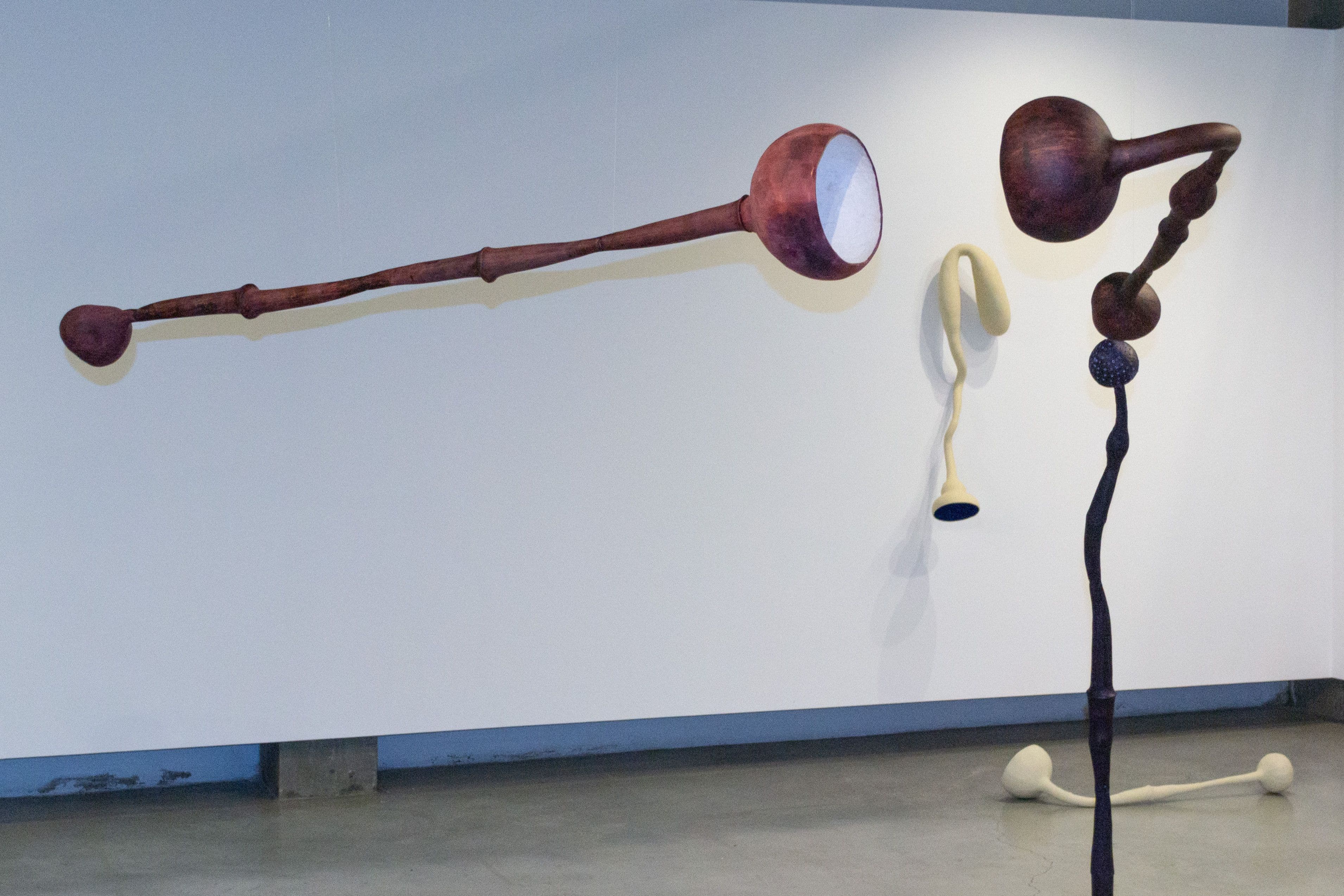
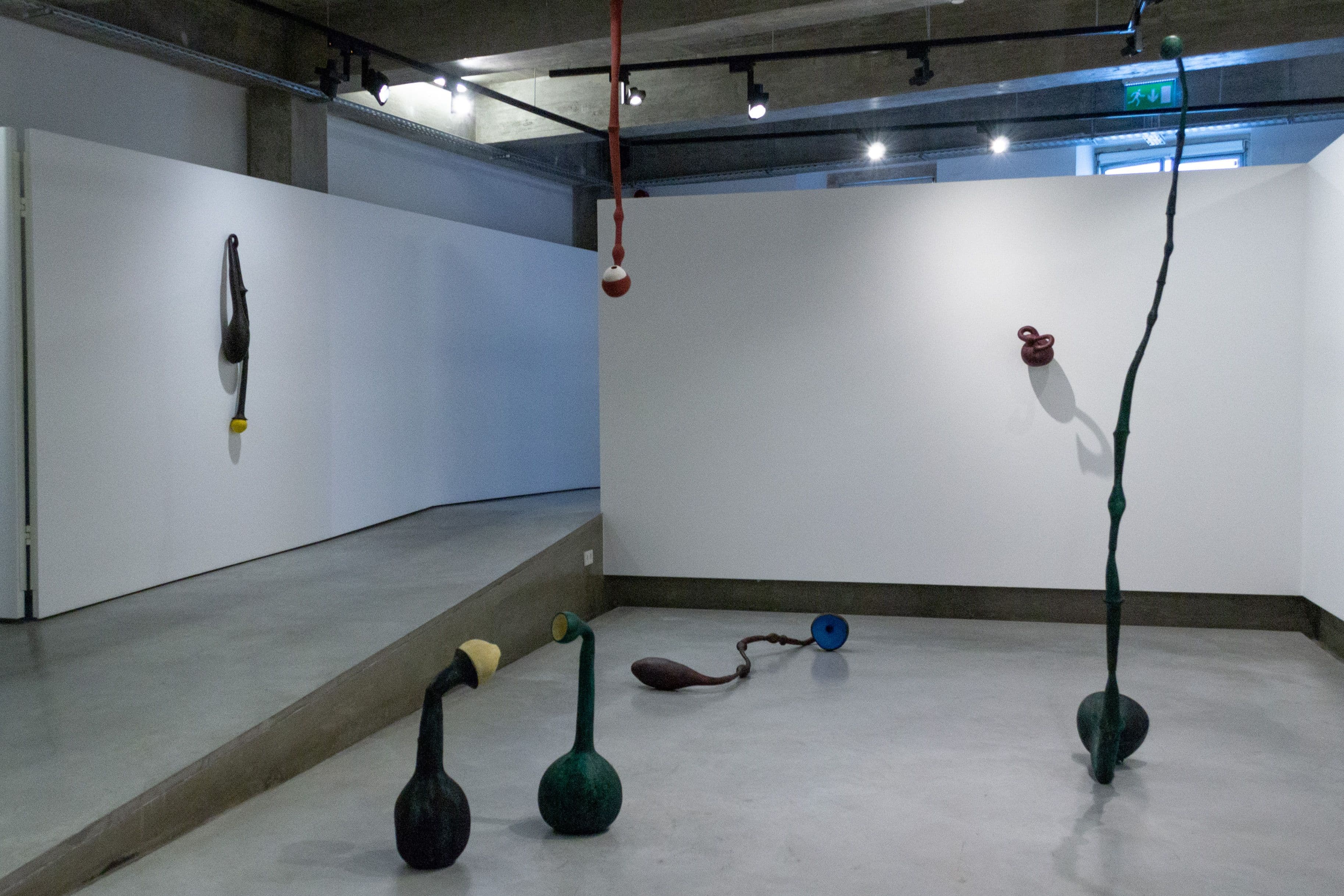
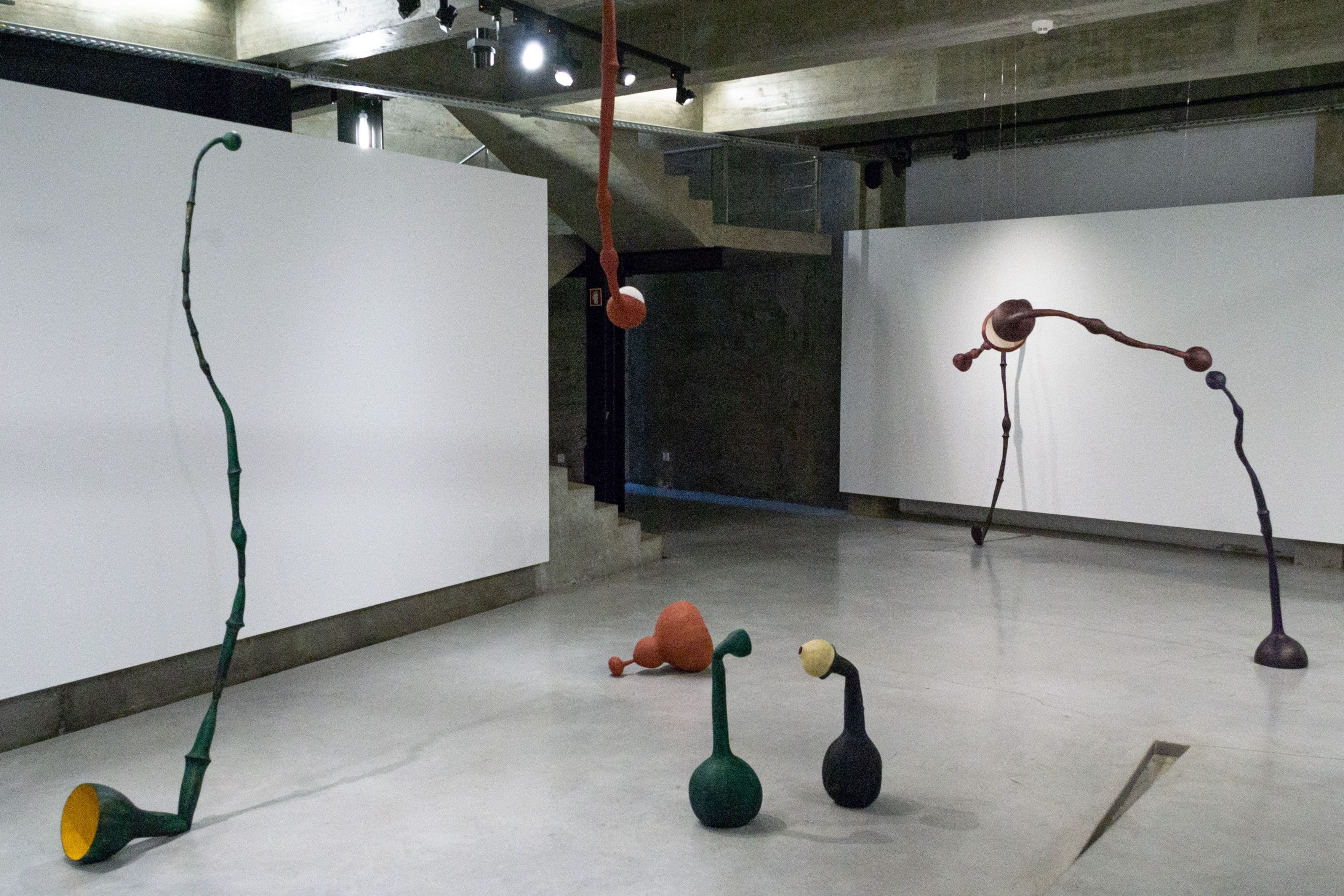
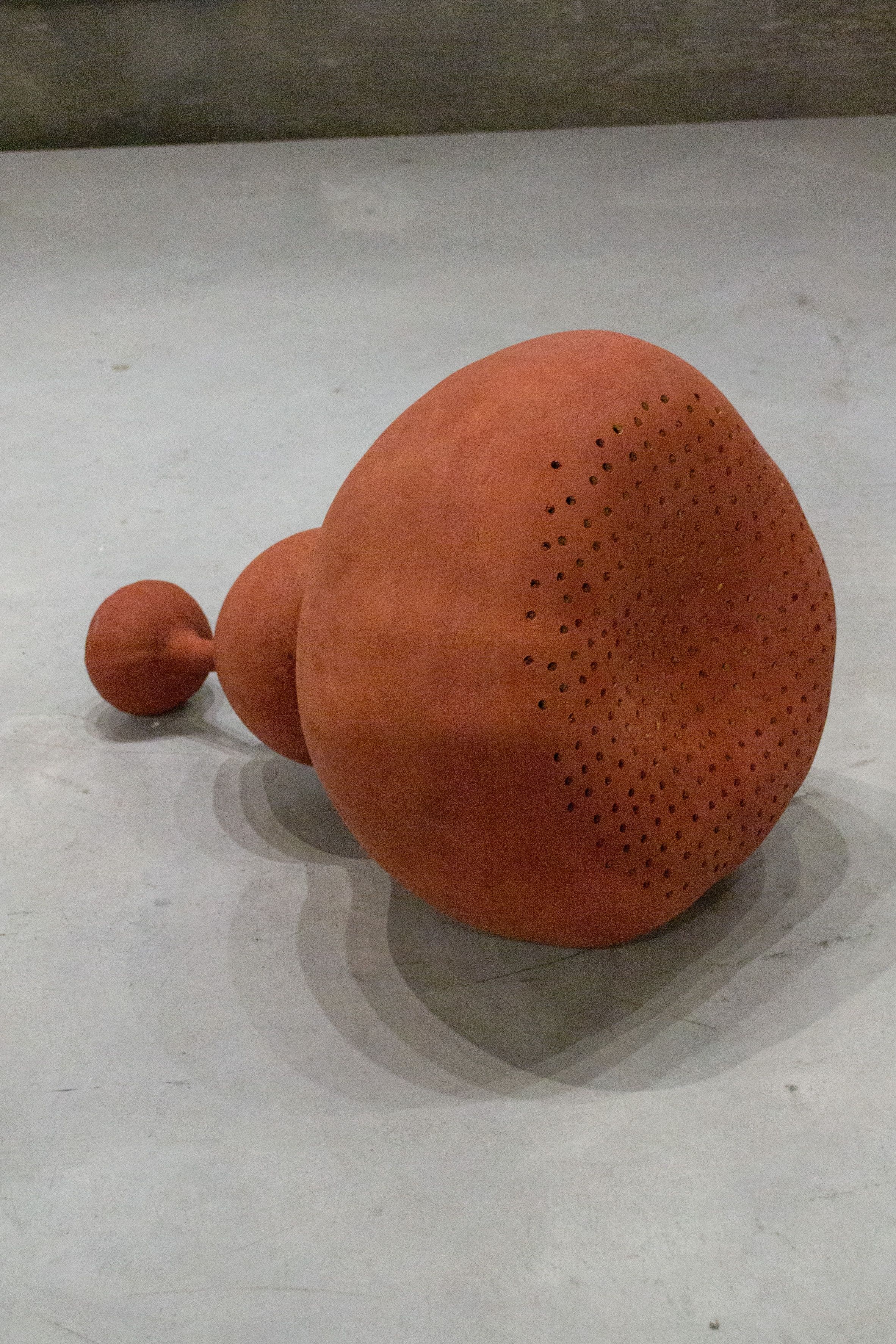
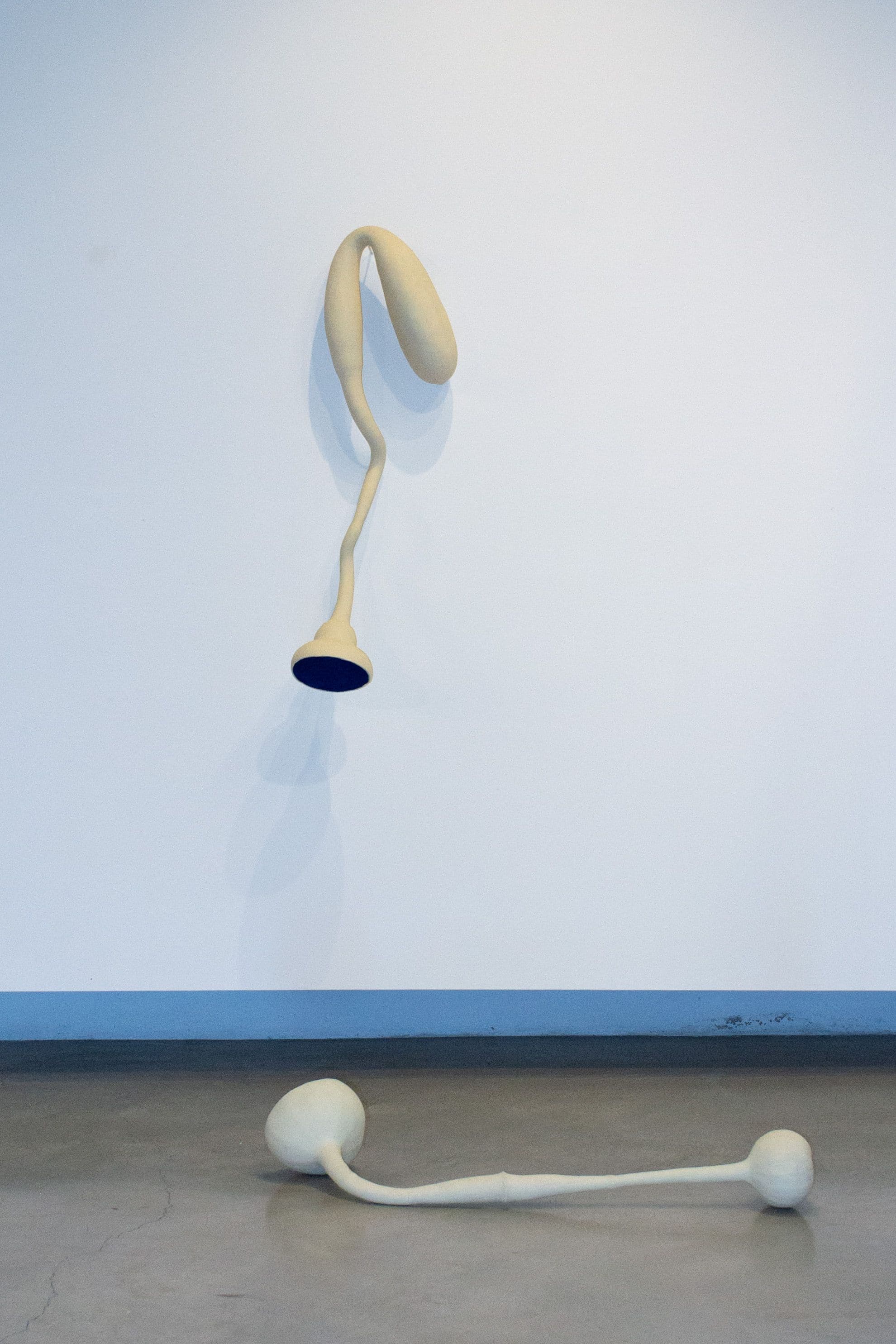
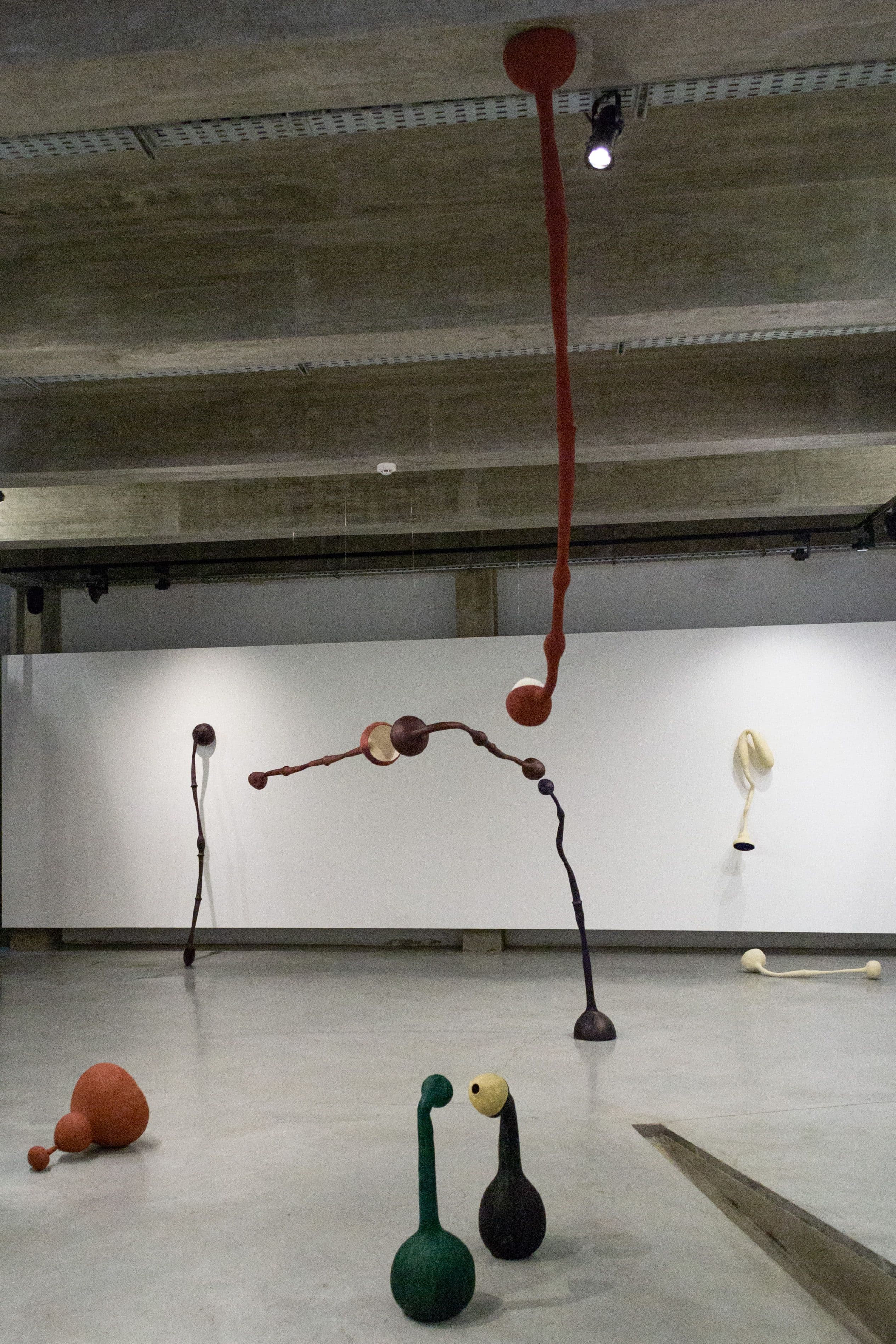
The gourd, as an everyday object, is the protagonist of Dream Speakers (2023), by Dalila Gonçalves (1982, Castelo de Paiva). As is common in her practice, she identified the object in her own daily life and, from there, began collecting gourds using online purchases and, essentially, her family and friends. In recent years, sound – and the listening processes inherent to it – has gained a predominant role, and it was precisely this association of the gourd with musical instruments that interested the artist. In her research on the uses and methods of transforming gourds, she discovered instruments such as the rattle, the afoxé, the berimbau, the balafon, water gourds, the marimba, among others, including several used in capoeira.
In an initial phase, Dalila Gonçalves began to group the gourds and work with them to highlight their connection with sound and music. In a process of cutting, gluing, and painting, the artist began to draw in space: the interconnected gourds took shape and dominated the space in a process that visually invites listening. In fact, it invites attention, or the act of paying attention. Unlike previous works, such as the Vapor Symphony (2023) or the Air Columns (2020-21), at first glance, Dream Speakers is not a performative work. The work is not activated by any kind of action, like the sound that is part of and differentiates the device from the Vapor Symphony, and there is no performance preceding the installation, like the performers who played the whistles with animal shapes before placing them in predetermined locations in the Air Columns. However, a closer reading will reveal that the installation invites an action – or a performance – on the part of the audience. Because of their amplifying instrument-like appearance, reminiscent of a dreamlike world between the viscera and the senses, we are invited to approach, in an attempt to hear some kind of sound. However, no matter how close we get, we hear no sounds whatsoever.
More than a hundred years ago, shortly after the beginning of the First World War, the Futurist artist Luigi Russolo (1885-1947, Italy) proposed the idea that urban and industrial sounds were musical material. Due to their intensity, volume, texture, and form, the end of the history of music should be announced and replaced by a vigorous art of noise (Toop, 2005). In recent years, also marked by conflicts of various dimensions and global impacts, from wars to a global pandemic and numerous social movements, silence and listening have been explored for their capacity to create spaces of empathy and conviviality. Dream Speakers, in its occupation of space and invitation to listen, to speak, to hear and to be heard, joins the recent, but growing, tradition of the art of silence. A silence that, in fact, is composed of an ecosystem of ways of listening.
Dalila Gonçalves
1982. Castelo de Paiva (Portugal)
Lives and works in Porto. She holds a degree in Fine Arts - Painting (FBAUP 2005) and a Master's degree in Visual Arts Education from FBAUP and FPCEUP (University of Porto 2009). She completed the first year of her PhD at the same university. In 2008, she was selected for the second edition of the Photography Course of the Gulbenkian Creativity and Artistic Creation Program. Between 2010 and 2011, she worked in Barcelona at the studio of artist Ignasi Aballí as a fellow of the Inov-art program. She was an artist in residence at the KulturKontakt Programme, Vienna, Austria (2017); and at the Inclusartiz Residency (Rio de Janeiro 2014). She participated in the Pivô-Arte e Pesquisa Residency (São Paulo 2018), Fundación Marso (Mexico City 2020), and Projeto Fidalga (São Paulo, 2023). She regularly exhibits in institutions and galleries in various countries in Europe, South America, and the USA. Her work is represented in public and private collections in these countries. She has presented her work at Arco Madrid (soloproject); Zona MACO, Mexico (soloproject); ArcoLisboa; ArteRio and SPArte (soloproject), Brazil; ArtBO, Colombia; ArtLima, Peru; Vienna Artfair, Austria; Artíssima, Italy; and Untitled Miami (USA).