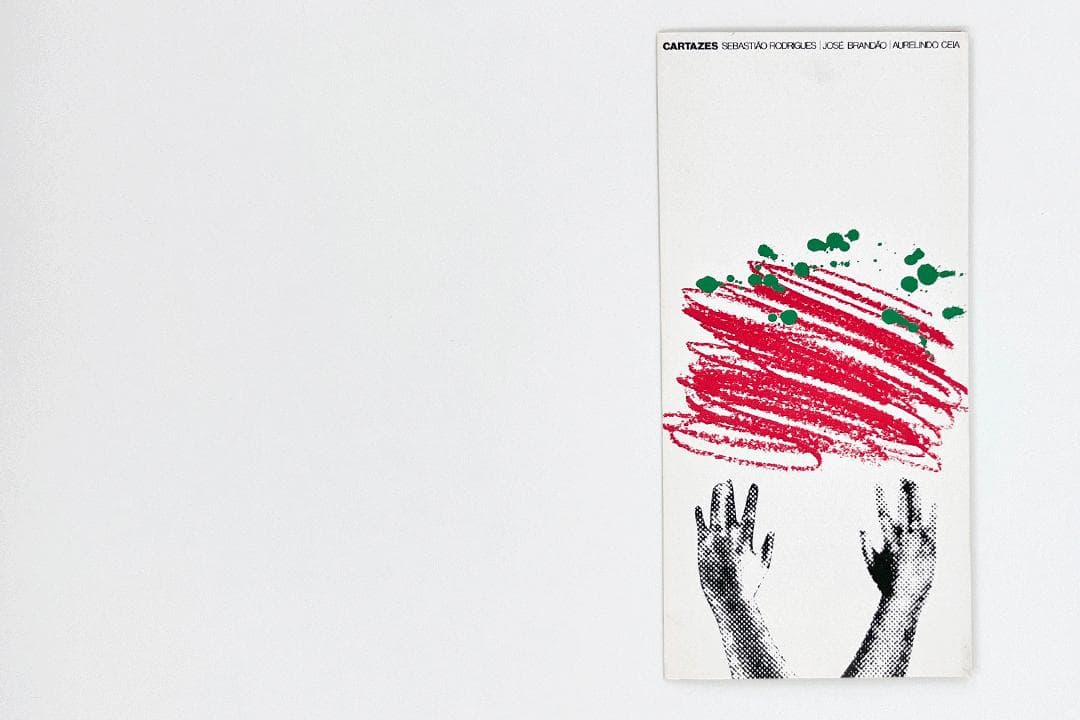
Posters
Sebastião Rodrigues, José Brandão, Aurelindo CeiaAmong these creations of the technological age, we must first turn our attention to some important domains: industrial design, graphic arts, photography, and, naturally, cinema and the visual arts, which utilize new materials and mechanisms derived from industrialization. Regarding the so-called "graphic art," which encompasses all sectors ranging from advertising posters and lettering to leaflets, book and newspaper layouts, etc.—in a word, those visual products executed either manually or photographically, but always with a view to graphic production—typographic, lithographic, serigraphic—on a very large scale, so that it can be disseminated according to the needs of the newspaper or manifesto; and it is necessary above all to insist on the importance—both positive and negative—that advertising has had for the entire socio-economic structure of our time.
(...) Finally, a last characteristic is constituted by the possibility of mass reproduction of images, made possible by the advent of mechanical means of reproduction. In the case of photography and posters, their infinite repeatability dealt a serious blow to the concept of the "uniqueness" of the work, which had dominated past centuries.
This uniqueness of the artistic element is only partially undermined, because what matters is always the idea that led to the creation of the work.
Gillo Dorfles(*)
(*) Art critic born in Trieste in 1910, he has been a professor of Aesthetics at the University of Milan since 1956. This text, written in 1967, is taken from the work "Oscilações do Gosto", published in Portugal by Livros Horizonte in 1974.